
The best app monetization platform for 2027 depends on the work your app needs: running an ad auction, adding advertiser demand, introducing an offerwall or managing the existing stack.
This comparison covers advertising monetization. Subscription billing and in-app purchase systems need a separate evaluation. The products below are grouped by role so a mediation platform can be compared with another mediator, while a demand source is evaluated as an addition to the auction.
App ad monetization platforms at a glance
| Platform | Role | Main integration work | Decision to resolve |
|---|---|---|---|
| Google AdMob | Ad monetization and mediation | Google SDK, ad units and partner configuration | Whether its supported sources cover your requirements |
| AppLovin MAX | Mediation | MAX SDK, adapters and network accounts | Whether a migration is worth its engineering cost |
| Unity LevelPlay | Mediation | LevelPlay SDK and supported network adapters | Which partners and formats your build needs |
| Appodeal | Packaged mediation | Appodeal SDK and network setup | Which dependencies and services the package includes |
| InMobi | Advertising demand | Supported SDK, adapter or account-specific route | Whether it adds value to your current inventory |
| Mintegral | Advertising demand | SDK, adapter and placement mapping | Whether supported formats match your placements |
| PubMatic OpenWrap SDK | In-app programmatic demand and auction tooling | OpenWrap SDK and the agreed integration | Compatibility with your current ad stack |
| Chartboost | Advertising demand | SDK, ad locations and mediation setup | Account approval and supported ad types |
| Tapjoy Offerwall | Reward-based monetization | SDK, virtual currency and reward delivery | Whether your app can support the reward economy |
| UndrAds | Autonomous AdOps | Agreed access and integration with your stack | Which operational actions to delegate and test |
The table describes product roles. It does not rank expected revenue. SDK requirements and format support depend on the operating system, framework and integration version.
Mediation platforms for your core ad stack
Google AdMob
AdMob provides in-app advertising, reporting and mediation tools. It can bring third-party sources into bidding or waterfall configurations, as described in Google's supported ad-source documentation.
It is a candidate when you need a core ad stack or want to expand one already in place. Start by checking available partners and formats before planning a migration. Account eligibility, privacy configuration, testing and payment arrangements still need attention.
AppLovin MAX
MAX manages multiple advertising sources through mediation. Its getting-started guide covers app setup, SDK integration, ad units, network configuration and testing.
Consider it when there is a clear reason to evaluate a different mediator. Compare reporting access, adapter maintenance and the networks you actually intend to use. Installing a mediation SDK does not remove the need to maintain partner accounts or understand who pays each portion of revenue.
Unity LevelPlay
LevelPlay is Unity's mediation product. Its network documentation identifies supported partners and integration choices.
For a 2027 build, distinguish LevelPlay from legacy ironSource advertising components. Unity's sunset FAQ states that ironSource Exchange and iAds SDK ad delivery will end on 31 December 2026, while LevelPlay remains supported. Review affected adapters and reporting access before releasing a new version.
Appodeal
Appodeal offers an SDK-based mediation setup. Its integration guide covers installation, ad formats, services and data-protection configuration.
Evaluate the package against the networks, analytics and services your app needs. Review the actual build dependencies and commercial terms. A universal publisher revenue-share percentage would hide differences between products, networks and contracts, so no such range is used here.
Demand sources to evaluate within mediation
InMobi
InMobi can supply demand within supported mediation setups. Google's Android integration guide describes the AdMob route, including SDK and adapter requirements, account setup and testing.
Evaluate demand by country, operating system and ad format. A label such as “best for Asia” provides too little evidence to justify development work. Check the route available to your account, then measure its effect on total placement revenue and availability.
Mintegral
Google documents Mintegral integration through AdMob, covering bidding and waterfall configurations, placement mapping, SDK installation and test delivery.
Use it as a candidate for an identified demand gap. Confirm current format support for your platform and adapter. Compare the entire placement before and after adding the source, including latency and the revenue displaced from other partners.
PubMatic OpenWrap SDK
PubMatic OpenWrap SDK provides in-app access to programmatic demand and auction tooling. Its product terms describe OpenWrap SDK as connecting mobile applications to third-party demand through RTB, private marketplaces and header bidding.
Confirm the specific interoperability arrangement with your current mediation provider. Engineering work, supported inventory, reporting and commercial terms depend on that arrangement. Brand-demand access is a product capability; a guaranteed increase in your app's revenue would require separate evidence.
Chartboost
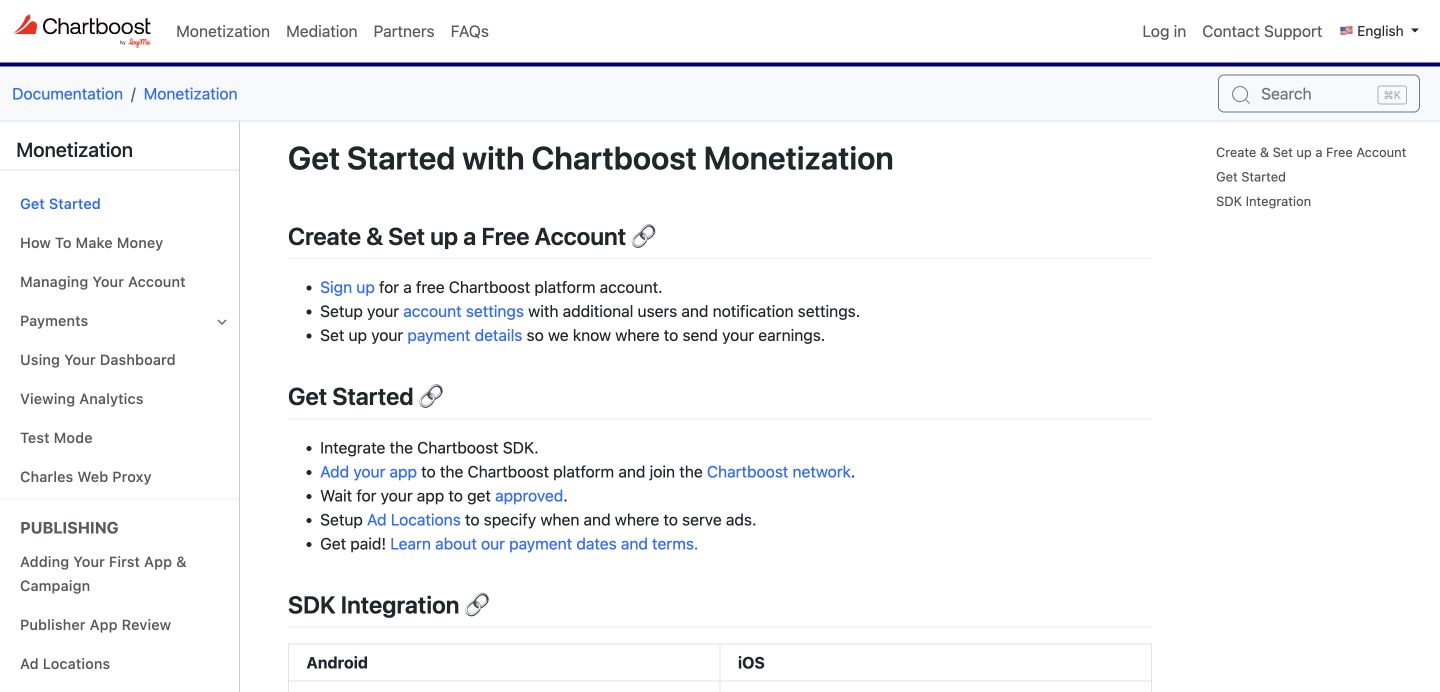
Chartboost's monetization setup guide requires an account, SDK integration, app approval and configured ad locations. Its mediation partner guide explains how to add Chartboost through supported platforms and check ad types.
Evaluate the demand integration separately from any mediation product carrying the same brand. Confirm the supported route with your partner before building. Each ad type needs the appropriate location and delivery test.
Offerwalls need a separate product decision
Tapjoy Offerwall
Tapjoy Offerwall lets users earn virtual currency by completing offers. Unity's setup documentation covers the SDK, placements and currency configuration.
It fits an evaluation where the app has a useful reward economy and a support process for missing rewards. Define conversion tracking, reward delivery and the effect on purchases before launch. Confirm publisher access and onboarding availability directly before scheduling development. Compare providers in the offerwall network guide.
Where UndrAds fits
UndrAds autonomous AdOps
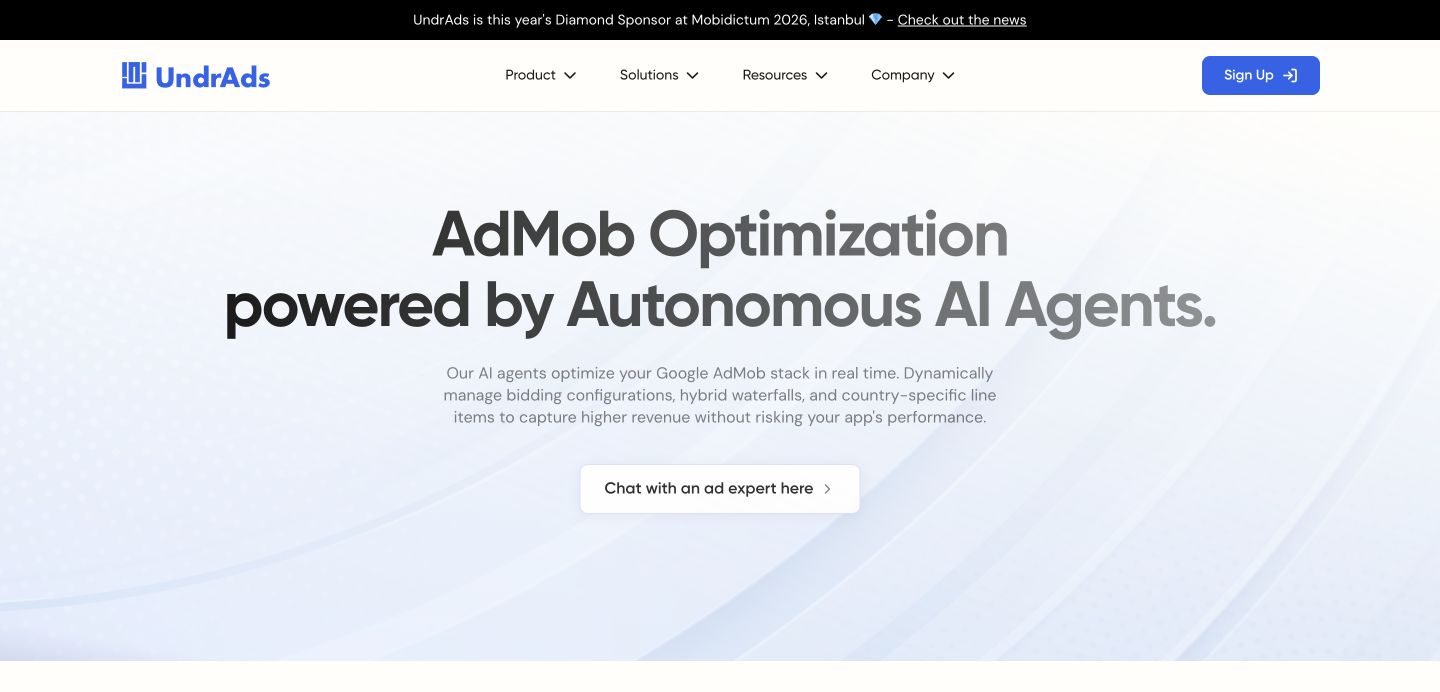
UndrAds' AdMob optimization service works with an existing setup to manage monetization operations. It belongs in the operational layer of this comparison.
Consider it when monitoring, investigation and configuration work are consuming your team's time. Agree on supported actions, required permissions, integration and rollback before a pilot. Measure results against a baseline that includes total revenue, retention and operational effort. Product access and fees should be confirmed for the scope you will use.
How to compare costs and commercial terms
Request the terms for the exact product and integration. A brand may offer mediation, direct demand and managed services under separate arrangements.
Record the payment schedule, minimum payout, deductions, currency conversion, invalid-traffic adjustments and any platform or service fees. Confirm whether each partner pays you directly or through another platform. These details affect cash received even when dashboard revenue looks similar.
Ask for format and inventory restrictions in writing. Treat onboarding approval and live demand availability as separate checks from technical SDK support.
Test one change before moving the whole app
- Define the problem. Specify the placement, country or workflow that needs improvement.
- Record a baseline. Include revenue, impressions, ad availability, daily active users, retention and app stability.
- Validate integration. Test loading, display, rewards, reporting and privacy signals before measuring commercial performance.
- Compare equivalent users. Use a concurrent comparison where feasible. Keep other placement and frequency changes out of the same experiment.
- Review total value. Measure ad revenue per daily active user alongside purchases, retention, latency and maintenance work.
A network's eCPM can rise while total revenue falls if fewer ads are delivered. For example, 10,000 impressions at $10 eCPM produce $100; 6,000 impressions at $12 produce $72. Use the measure that reflects your business objective.
App monetization platform FAQ
Which app monetization platform pays the most?
There is no verified universal winner for every app. Revenue depends on audience, formats, demand, implementation and commercial terms. Compare final publisher revenue across equivalent user groups.
Do I need a new mediation platform to add demand?
Check your current platform's supported integrations first. AdMob, MAX and LevelPlay support multiple sources. Adding an eligible source can be a smaller project than changing the whole mediator.
Should I use an offerwall in a subscription app?
Only after defining what users earn and how the reward affects paid conversion. Offerwalls require a clear value exchange and dependable reward delivery. The format should be tested against the app's existing business model.
Does UndrAds replace the ad network?
UndrAds is positioned here as autonomous AdOps for an existing monetization setup. Confirm the supported stack and scope of work with the team. Start with a defined operational problem and an agreed measurement plan.
If the current stack needs investigation, ask UndrAds to review it before committing engineering time to a migration.