
Top apps by revenue are useful to study because they show different ways to turn repeated use into a business. Some sell virtual items, some combine purchases with advertising, some charge subscriptions, and some operate platforms that share value with creators. Putting those models in one list only helps when the differences remain visible.
This guide retains 19 app examples across four categories. It is an editorial selection of monetization case studies, rather than a global ranking by comparable revenue.
Product and monetization descriptions below link to official websites, publisher documentation or developer-provided store information. Where a comparable app-level revenue amount is not established by those sources, the guide leaves it undisclosed. A parent company’s revenue should never be substituted for an individual app’s earnings.
The practical lessons are recommendations for publishers to evaluate. They do not claim access to these companies’ internal segmentation, conversion models, ad frequency rules or profit margins. Public product behavior can inspire a useful test without proving why a company made a decision.
How to read an app revenue comparison
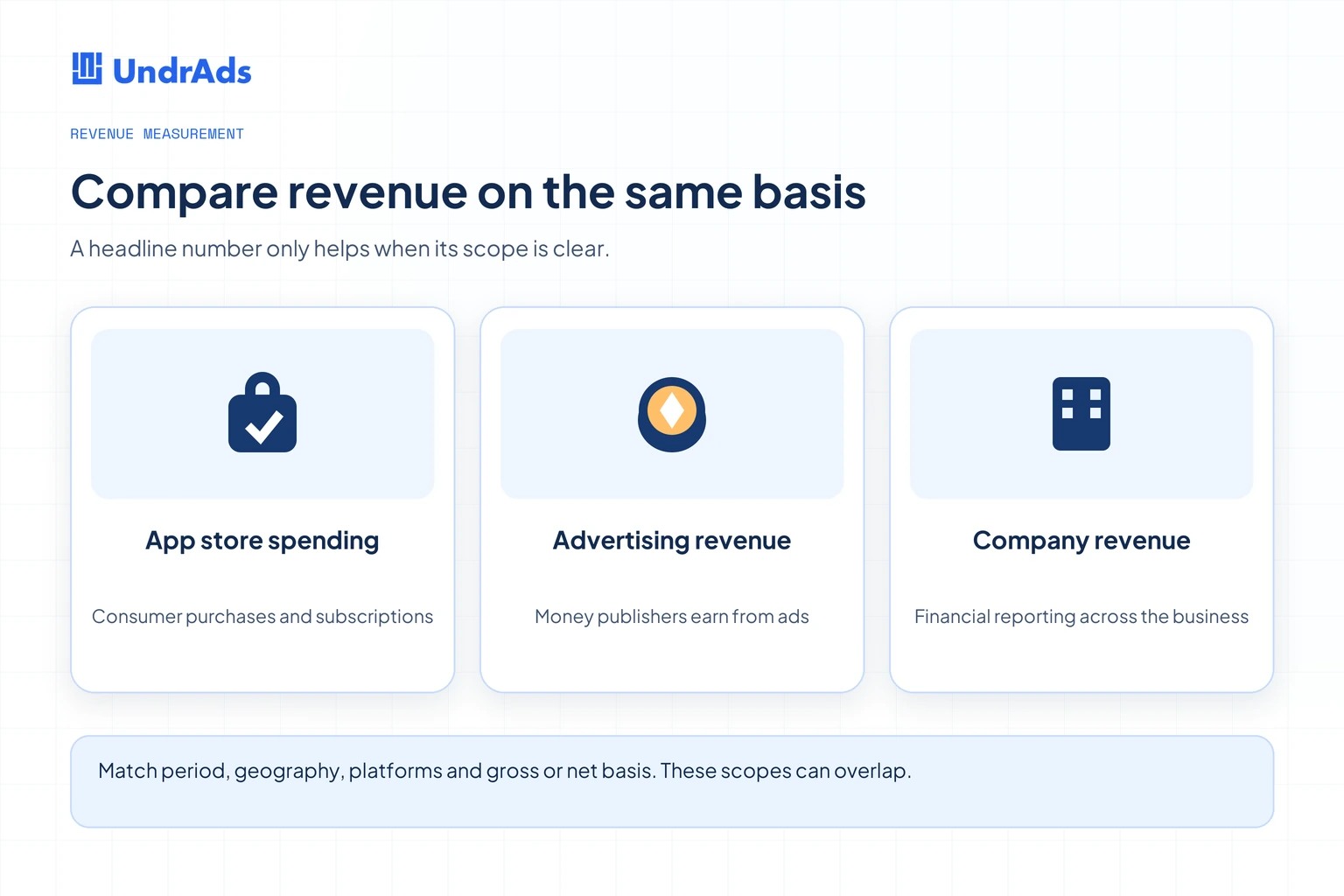
Start with the measurement. An app-store estimate of consumer spending can exclude advertising and web purchases. A company’s financial revenue can include several products and platforms. Bookings can recognize activity on a different basis from revenue. Lifetime consumer spending and annual net revenue cannot be ranked as if they were the same metric.
For a defensible league table, every entry needs the same period, geography, platform coverage and gross or net treatment. When that evidence is unavailable, a comparison of business models is more useful than a precise-looking total assembled from unrelated sources.
The list below therefore identifies the revenue mechanism to study and the boundary to remember. Keep those boundaries in any presentation or spreadsheet that reuses the article. Removing them can turn an accurate product example into a misleading market claim.
| App | Monetization mechanism to study | Revenue comparison caution |
|---|---|---|
| Candy Crush Saga | Purchases and selectively available rewarded ads | Separate the title from King’s wider portfolio |
| Coin Master | Virtual items and progression-related purchases | Keep annual and lifetime figures separate |
| Wordscapes | Advertising, rewards and ad-removal purchases | Do not infer an unpublished ad revenue split |
| Subway Surfers | Ads, rewards and purchases | Downloads do not establish revenue per player |
| Royal Match | Ad-free play supported by purchases | UA spending differs from in-game ad earnings |
| PUBG MOBILE | Virtual currency, items and Royale Pass | Do not combine different regional products silently |
| MONOPOLY GO! | Purchases within a recurring event and collection loop | Use a single defined measurement period |
| Last War: Survival | Purchase-centered progression | Store spending estimates do not establish profit |
| Whiteout Survival | Virtual goods and ongoing progression | Account for store and direct purchase scope |
| Free Fire | Diamonds, items, events and passes | Garena segment results cover more than this app |
| Roblox | Virtual economy, creator monetization and eligible ads | Company results span a cross-platform business |
| Pokémon TCG Pocket | Poké gold and Premium Pass | Use purchase mechanics accurately |
| Duolingo | Subscriptions, advertising and other paid products | Company revenue includes more than one product |
| Tinder | Subscriptions and paid discovery features | Use Tinder-specific reporting, not all Match Group revenue |
| MyFitnessPal | Subscriptions and an ad-supported free experience | A comparable app-level total is not established here |
| Strava | Subscriptions and commercial brand programs | Metro is offered free and is not counted as data sales here |
| DramaBox | Paid access, coins and rewarded viewing options | Offers and prices vary by market and version |
| CapCut | Free tools with paid plans and capabilities | A parent platform’s value is not app revenue |
| Kwai | Advertising and creator or commerce programs | Group and overseas segment figures have different scopes |
Category 1: casual games and repeatable play
These five games illustrate different choices around a short, recognizable play loop. They should not be assumed to share the same ad load or purchase strategy. Even within one title, an optional feature may be available to only part of the audience.
1. Candy Crush Saga

Candy Crush Saga combines a familiar puzzle loop with purchases and, for eligible players, rewarded video opportunities. An official King Community explanation says video ads can appear or disappear, vary between groups and offer different rewards. The feature should not be described as universally available or governed by a publicly proven payer rule.
The useful product observation is that a benefit can be tied to a specific moment in play. An extra attempt or useful booster is easier to understand when the player already knows the obstacle. That does not establish a single optimal reward value for every puzzle game.
Publisher lesson: test the reward at the moment it matters, with purchase behavior and retained play in the same report. Keep the experiment’s eligibility rules explicit so a change in the audience does not masquerade as a change in placement performance.
Also prepare a clear support explanation for optional features. If users compare accounts and see different options, they need accurate information about availability. Avoid promising that an ad will always load when demand, account state or product testing can affect it.
Measure successful reward delivery separately from ad completion. A player remembers the missing booster, while a network dashboard may record only the completed impression. Both records are needed to understand the experience.
2. Coin Master

Coin Master links spins, coins, villages, events and collections within its progression. Coin Master’s official help describes several routes to spins, including friends, events, villages and card sets. Purchases operate within that broader economy, rather than being the only source of continued activity.
For a publisher, the interesting question is how earned and purchased resources fit together. If a resource appears in events, social gifting and paid bundles, its value depends on more than the shop price. The studio needs a coherent view of how much enters and leaves the economy.
Publisher lesson: map every source and sink for a monetized resource before changing its paid or rewarded supply. A promotion can look attractive in isolation while making the next progression step easier than intended.
Keep the event and purchase records connected. If a cohort spends more during an event, check whether it also returns afterward and whether the new supply changes later behavior. The relevant observation window should follow the product loop.
Do not assume that another game’s spin economy establishes a suitable ad reward for yours. Test the benefit users actually understand, and preserve enough progression for the game to remain satisfying after the reward is granted.
3. Wordscapes

PeopleFun’s Wordscapes combines word puzzles with advertising and paid options. Its ad-removal help page distinguishes ads between puzzles and banners from optional rewarded videos. Ad removal can therefore have a specific scope rather than removing every possible advertising interaction.
That distinction matters when designing and describing a paid upgrade. Users should know what disappears, which optional opportunities remain and whether the purchase is permanent or time limited. A short label such as “remove ads” needs a product definition behind it.
Publisher lesson: write the purchase promise before implementing the offer. Then test the experience against that promise on a fresh account, a paying account and a returning account after reinstall or restoration where applicable.
For an ad-supported puzzle, inspect the transition between levels and the return from an ad. A placement that interrupts reading or word entry can have a different effect from one shown after a completed puzzle.
Evaluate ad-removal conversion alongside the revenue and retention of users who keep the free experience. An upgrade should provide clear value. The article does not assign Wordscapes an unpublished percentage split between advertising and purchases or a universal mediation configuration.
4. Subway Surfers
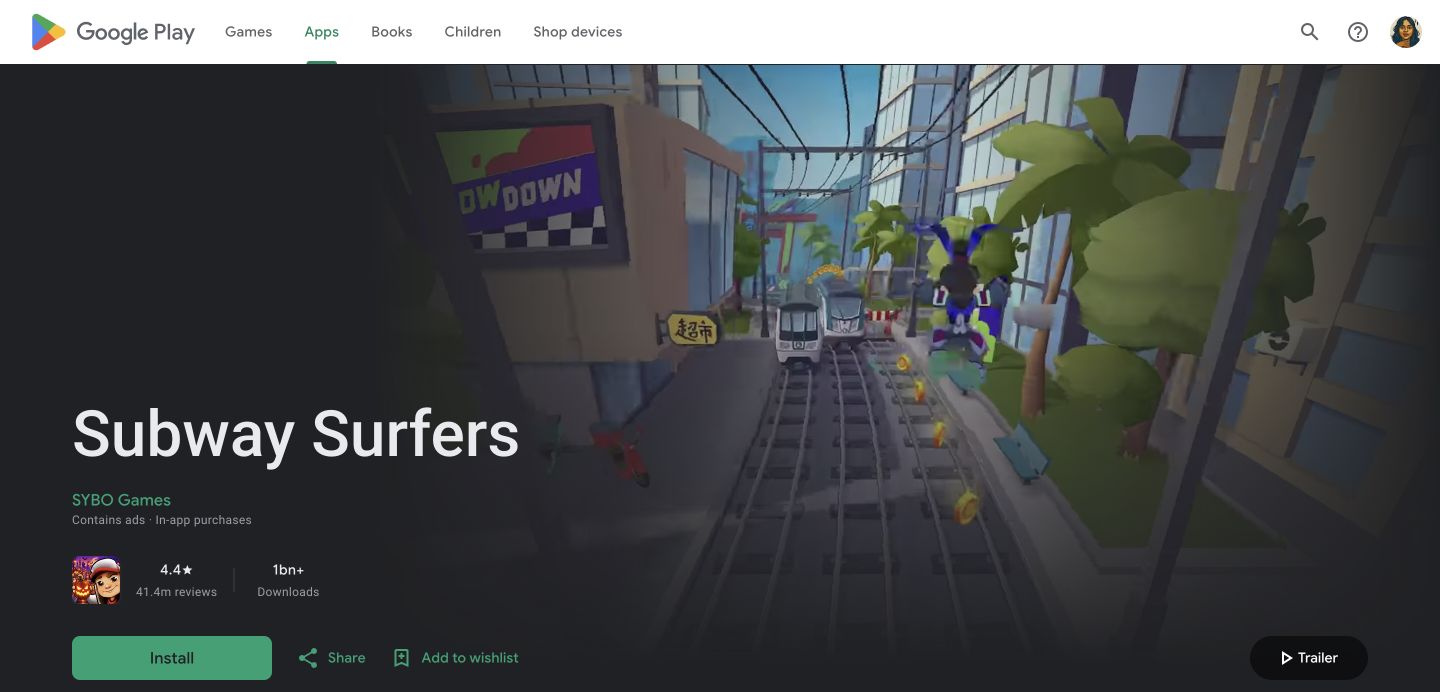
SYBO’s Subway Surfers store listing identifies advertising and in-app purchases. It provides a useful example of monetization around repeatable runs, rewards and collectible content. Public product information does not establish a universal eight-ad daily cap or a promise that every purchase removes every interstitial.
An endless runner gives a publisher several possible moments to evaluate: after a run ends, while reviewing progress or when the player considers another attempt. Those moments have different implications for concentration and pacing. The suitability of each must be tested in the actual game.
Publisher lesson: preserve the active play sequence and evaluate monetization at understandable transitions. For any rewarded continuation, show the benefit clearly and verify the exact state to which the player returns.
Track the whole session. An ad that earns money immediately can still influence whether the user starts another run. Compare runs per session, session abandonment and later retention with revenue.
For a game serving a broad device range, include performance after the ad as well as before it. Recovery from backgrounding, audio state and memory pressure can affect the experience. Those are engineering checks your own implementation needs, independent of the example being studied.
5. Royal Match

Royal Match is an important purchase-led comparison because its developer-provided Google Play description explicitly advertises an ad-free experience and lists in-app purchases. Ads used to acquire Royal Match players are a marketing expense or distribution activity, separate from advertising revenue earned inside the game.
Its public product combines match-three play, progression, boosters and events. Those elements provide several kinds of value for players who choose to spend. They do not prove a particular internal conversion tactic, level-design intention or share of rewarded creatives in the company’s acquisition mix.
Publisher lesson: evaluate whether purchases can support the experience your audience wants. If an ad-free product promise is central to the design, keep it visible in the commercial model rather than assuming every successful mobile game must carry network ads.
A purchase-led game still needs to serve users who never buy. Test progression, content access and the clarity of paid benefits for both groups. A strong free experience can support continued engagement without requiring every player to convert.
When comparing this model with a hybrid game, include content production and acquisition costs. Revenue alone does not establish profitability, and a successful title’s scale does not remove those operating requirements for a new studio.
Category 2: strategy, competitive games and platforms
The next seven examples broaden the comparison. They include strategy games, battle royale titles, a creator platform and a collectible card app. Their shared lesson is to examine the specific paid benefit and operating model, while keeping competitive balance, social behavior and content costs in view.
6. PUBG MOBILE
PUBG MOBILE uses virtual currency, cosmetic items and the Royale Pass within its commercial model. Its official Royale Pass information shows the ongoing pass and event structure. Regional versions and distribution arrangements should be identified explicitly when using revenue or audience estimates.
A competitive multiplayer game needs a clear explanation of what a purchase changes. Players may value appearance, collection and participation in a season, while also caring strongly about the integrity of the match. Avoid making a blanket claim about every paid item’s gameplay effect without checking the live product.
Publisher lesson: connect the offer with an understandable player goal and review how it interacts with competition. Have the product team define which benefits are appropriate to sell and how they are communicated.
Model the recurring production commitment behind a pass. Artwork, rewards, events, localization and QA must arrive on schedule for the paid experience to keep its value. Include those costs when comparing a seasonal model with individual purchases.
The example does not establish a particular ad revenue share or a universal pattern of interstitials in selected markets. Where those claims cannot be supported by current primary evidence, they should stay out of the planning model.
7. MONOPOLY GO!
Scopely’s MONOPOLY GO! combines a board-game-inspired progression loop with events, collections and purchases. The business is useful to study for the connection between a recurring resource, a short-term objective and a longer collection goal.
An event can give the player a reason to care about the next action. A collection can give the same action a longer horizon. A publisher designing that combination should model how rewards move between systems so one promotion does not unintentionally overwhelm another.
Publisher lesson: use a visible event calendar with an explicit hypothesis for each commercial change. Track participation, completed objectives, purchases and return behavior after the event finishes. Avoid evaluating every event only by its peak revenue day.
If a game offers direct purchases outside an app store, review the current platform and market requirements for that implementation. Model the actual payment costs and user journey rather than assuming every transaction bypasses one fixed fee.
This comparison does not assume that rewarded dice are available to every MONOPOLY GO! player. Optional features and tests need current evidence and defined eligibility. The transferable lesson is the coordination of progression and events, which your team can investigate without inventing an ad configuration.
8. Last War: Survival

Last War: Survival combines accessible action sequences with deeper survival and strategy systems. Its publisher store description identifies a free-to-play product with optional real-money purchases, including random items. Sensor Tower named it among the leaders of its 2025 mobile revenue analysis.
For a studio, the design question is how the first-session promise connects with the game users continue playing. A simple entry mechanic can reduce initial complexity, but the transition into deeper systems still needs to be understandable and satisfying.
Publisher lesson: inspect the complete path from acquisition creative through onboarding and later progression. Measure where users recognize the advertised experience, where new systems appear and where engagement changes.
For paid progression, document the benefit and any prerequisites clearly. A valuable purchase can become a support problem if players cannot understand when or how it can be used. Keep fulfillment and account records traceable.
Do not treat a mismatch between an ad and the installed game as a recommended growth tactic. Evaluate product accuracy and retained value together. The app’s reported spending success does not establish that any particular advertising claim is appropriate for another publisher.
9. Whiteout Survival
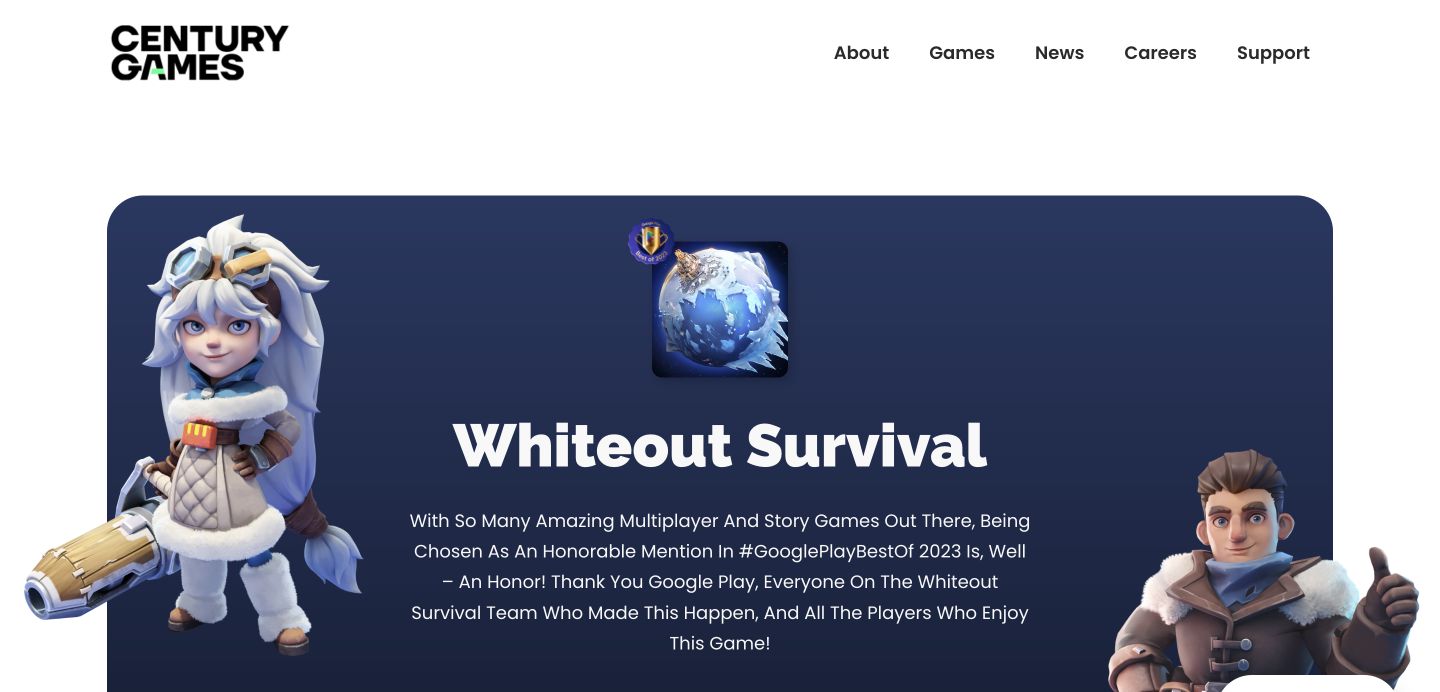
Century Games’ Whiteout Survival uses survival and settlement progression with optional purchases. Its official shop terms describe purchases of virtual currency or virtual goods through its website. That direct channel is another reason to inspect the scope behind app-store revenue estimates.
The product offers a useful case for studying long-term progression and social systems. A studio adopting a similar structure needs a realistic plan for economy balancing, event production and support over time.
Publisher lesson: separate the user-facing offer from the accounting path. The player needs accurate item delivery and a clear receipt regardless of whether the purchase is made through a store or an approved direct channel.
Keep revenue reports consistent across channels. Preserve transaction currency, refunds and adjustments, then reconcile them to the financial view used for marketing decisions. A dashboard limited to one channel cannot establish the entire game’s monetization.
The public sources used here do not establish specific regional offer logic, a universal absence of ads or a fixed percentage of playable acquisition creatives. Use those as questions for research if relevant, rather than presenting them as settled facts. The visible commercial lesson is the operating complexity behind ongoing progression and virtual goods.
10. Free Fire

Garena’s Free Fire uses diamonds and a range of items, events and pass-related systems. Its official OB55 notes discuss diamond-related mechanics, Luck Royale and Booyah Pass. The current terminology should replace older references that assume the historical Elite Pass remains the only relevant product.
Studying the title is useful for publishers designing recurring content for different audiences. Keep the actual audience and regional product identified. A country’s overall mobile advertising share cannot be used to infer Free Fire’s own revenue mix.
Publisher lesson: evaluate localization as a product and operating task. The work includes creative, events, support and commercial presentation, beyond translating a few interface strings. Use evidence from the users you intend to serve.
For competitive games, review the actual effect of each paid item before describing the model as entirely cosmetic or entirely neutral to gameplay. Product details matter more than a convenient category label.
When using financial information, distinguish Free Fire from the Garena business segment and the wider Sea group. Those disclosures cover different activities. Keep the source’s own scope attached instead of turning segment revenue into an unsupported app-level figure.
11. Roblox

Roblox operates a platform where creators build experiences and participate in a virtual economy. It therefore differs from a single mobile game. Its company results and platform engagement can span devices, products and creator activity.
Roblox’s rewarded video documentation describes an eligible creator monetization path, with implementation, content and reward requirements. It states that rewards must use developer products and cannot be Robux. An app publisher should not assume that a conventional mobile ad integration can be copied into Roblox unchanged.
Publisher lesson: understand the rules of the platform on which the business operates. Revenue sharing, payout eligibility, advertising formats and account requirements can be as important as the experience’s product design.
Keep creator earnings separate from total user spending and corporate revenue. Each answers a different question about the same business. Avoid quoting one universal creator share without identifying the transaction and payout rules involved.
For an eligible rewarded placement, measure availability, completed views, reward delivery and the effect on the experience. Follow the current platform documentation for implementation. Treat the creator’s retained audience as part of the economic assessment, alongside the new ad revenue.
12. Pokémon TCG Pocket
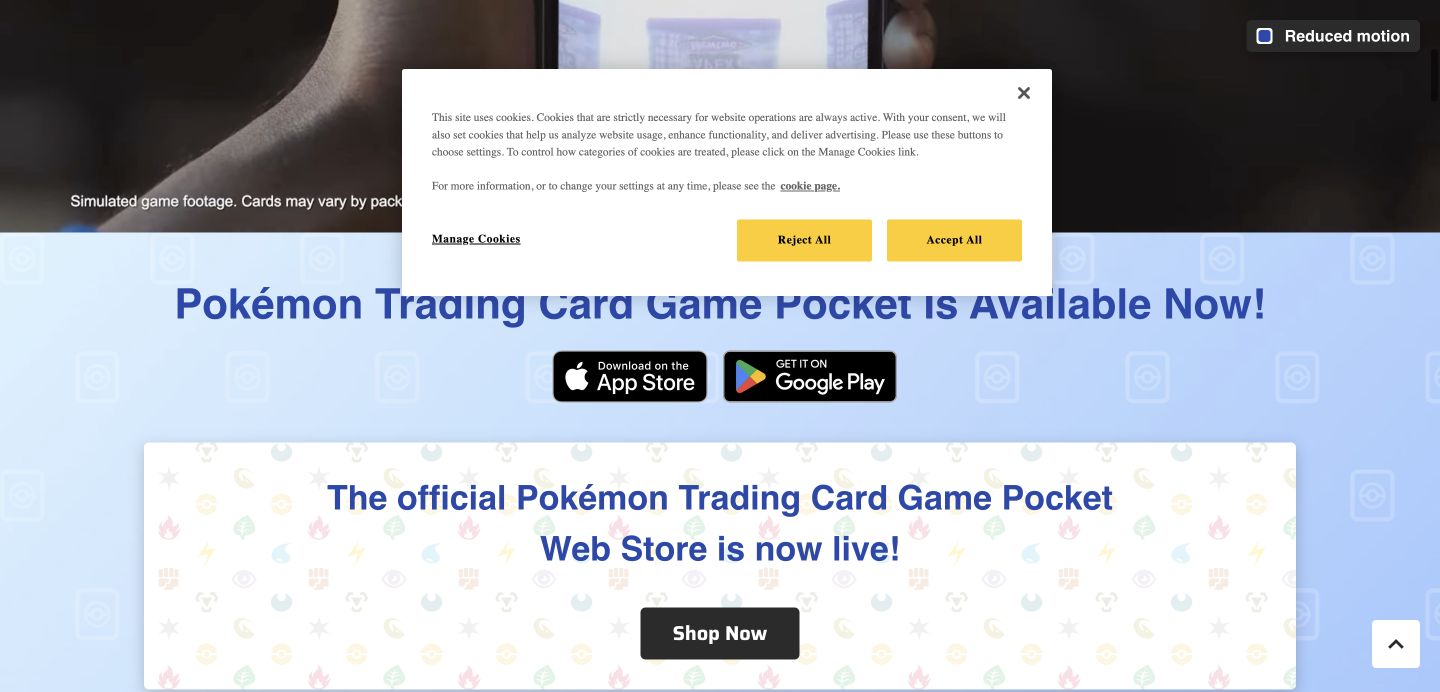
Pokémon TCG Pocket is a free-to-start collection game with optional purchases. The official product page describes two free booster packs per day. Its purchase and Premium Pass FAQ identifies Poké gold and the pass as paid mechanisms.
Keep the currencies accurate. Pack hourglasses and Poké gold are different resources, and describing all time reduction as a direct purchase of hourglasses can misrepresent the product. The paid pass adds defined benefits within the collection experience.
Publisher lesson: model the value of a paid benefit beside the free cadence users already understand. A collection product needs clear explanations of what the user receives, how timing works and which purchases are optional.
Evaluate the whole user relationship, including the enjoyment of collecting and using the items. A timer is only one component of the product. Copying it into an unrelated app does not create the same motivation.
This guide does not attribute a verified in-game advertising business to Pokémon TCG Pocket. It belongs in the comparison as a purchase and subscription example. Keep product quality, content costs and platform requirements in the model instead of forcing every successful app into an ad-led explanation.
Category 3: lifestyle and utility apps
These four apps connect revenue with a recurring activity outside a game. Their paid benefits can involve convenience, insight, discovery or continued service. The operating question is whether the free product establishes useful value and whether the upgrade serves a clear user need.
13. Duolingo

Duolingo combines a free learning experience with paid subscriptions and other commercial products. Its Super Duolingo page includes ad-free learning among the paid benefits. Features and offers can vary between plans and product versions, so an old price or one historic energy mechanic should not be treated as a permanent global specification.
The app is useful to study for the connection between repeated activity, visible progress and a paid upgrade. For another publisher, the task is to identify a benefit that helps users pursue the goal that brought them to the product.
Publisher lesson: measure learning or task completion alongside subscription conversion. A commercial change can increase purchases while making the core experience harder to use. The product owner needs both outcomes to judge the result.
Test the upgrade explanation and the return to the free experience after a trial. Users should understand renewal, cancellation and which benefits remain. Avoid treating accidental conversion or an unclear offer as a successful design outcome.
When reporting revenue, separate Duolingo’s company-level disclosures from a narrow estimate of mobile subscriptions. Advertising, testing and other products can have different reporting scopes. The source period and business definition belong beside any number reused from an investor report.
14. Tinder
Tinder’s subscription documentation identifies Plus, Gold and Platinum, with different discovery and control features. It also notes that some benefits vary because of testing or subscription duration. The paid experience should be described using the current offer rather than a universal feature list.
The product illustrates the distinction between access to a service and optional tools that change how users find or present information within it. A publisher evaluating a similar structure should make the benefit understandable and avoid implying a guaranteed outcome from a visibility purchase.
Publisher lesson: describe the action a paid feature performs, then measure whether users value that action. A promise to prioritize presentation is different from a promise that another person will respond.
Separate recurring subscriptions from individual add-ons in the revenue model. Their purchase frequency, refund behavior and reasons for use can differ. A blended average can hide whether the product depends on a small group of repeat buyers.
Keep Tinder-specific figures distinct from Match Group’s total revenue. Also avoid assuming a free tier is intentionally broken or that every purchase is driven by a particular emotion. Those claims require evidence beyond the visible existence of paid discovery features.
15. MyFitnessPal
MyFitnessPal provides nutrition tracking with free and paid plans. Its plan comparison distinguishes Free, Premium and Premium+, including ad-free benefits on the paid tiers. The exact feature entitlements should be checked against the current product.
The app offers a case for studying a recurring personal task. Faster logging and useful analysis can become more valuable as a user’s needs develop. That progression provides a product question for another utility publisher: which improvement saves meaningful effort for the users who rely on the app most?
Publisher lesson: evaluate paid convenience against successful task completion. A user who can log accurately and understand the result has a clearer basis for deciding whether additional features are worthwhile.
Do not infer that health diary information is available for advertising targeting simply because the free product carries ads. Data use requires its own verified description. Commercial analysis should keep product data, permissions and the advertising implementation separate.
A comparable app-level revenue total is not established by the sources used here. Leave it undisclosed instead of presenting a private-company estimate as a reported result. The monetization comparison remains useful when it focuses on the publicly documented plan structure.
16. Strava
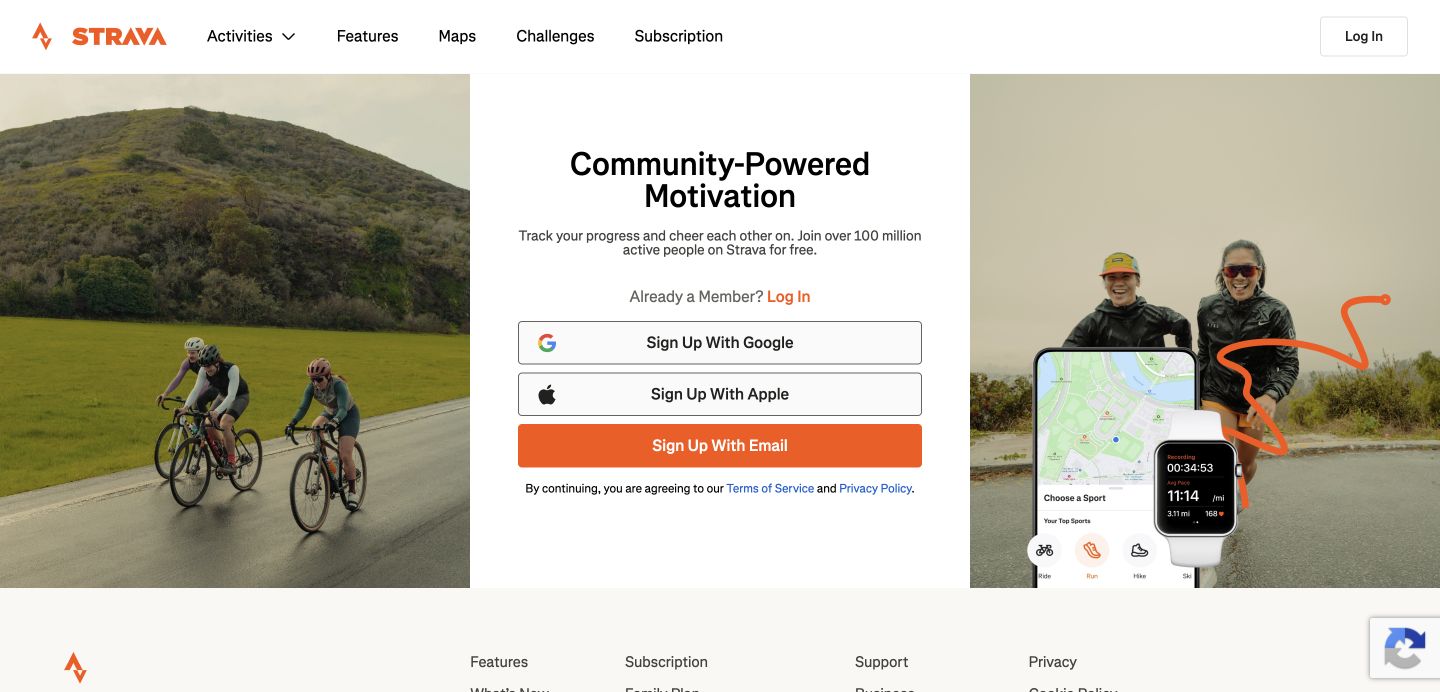
Strava combines a free activity community with paid subscription capabilities and commercial brand programs. Its product and subscription information should be checked for the market being discussed. An assumed global price or payer share would be too broad.
One correction is particularly important: Strava Metro says access is free for its planning partners. It should not be described here as an established business selling aggregated movement data to cities. A useful community-data program and a paid revenue stream are different things.
Publisher lesson: distinguish a feature’s strategic role from direct revenue. A community, challenge or data program may support participation without being a line item of paid sales.
For a subscription utility, identify the advanced workflow that engaged users value. Then test whether the paid feature improves that workflow and remains understandable to the free audience. Keep the core promise of the product clear when changing access.
A valuation, acquisition or reported financing event is also different from annual app revenue. Avoid mixing those figures in a top-grossing comparison. This guide leaves a comparable app-level total undisclosed rather than converting unrelated business headlines into a revenue estimate.
Category 4: short-form entertainment and creator tools
The final three examples connect content creation or consumption with monetization. Their economics depend on content supply, rights, distribution and the user journey, in addition to the interface where a purchase or ad appears.
17. DramaBox
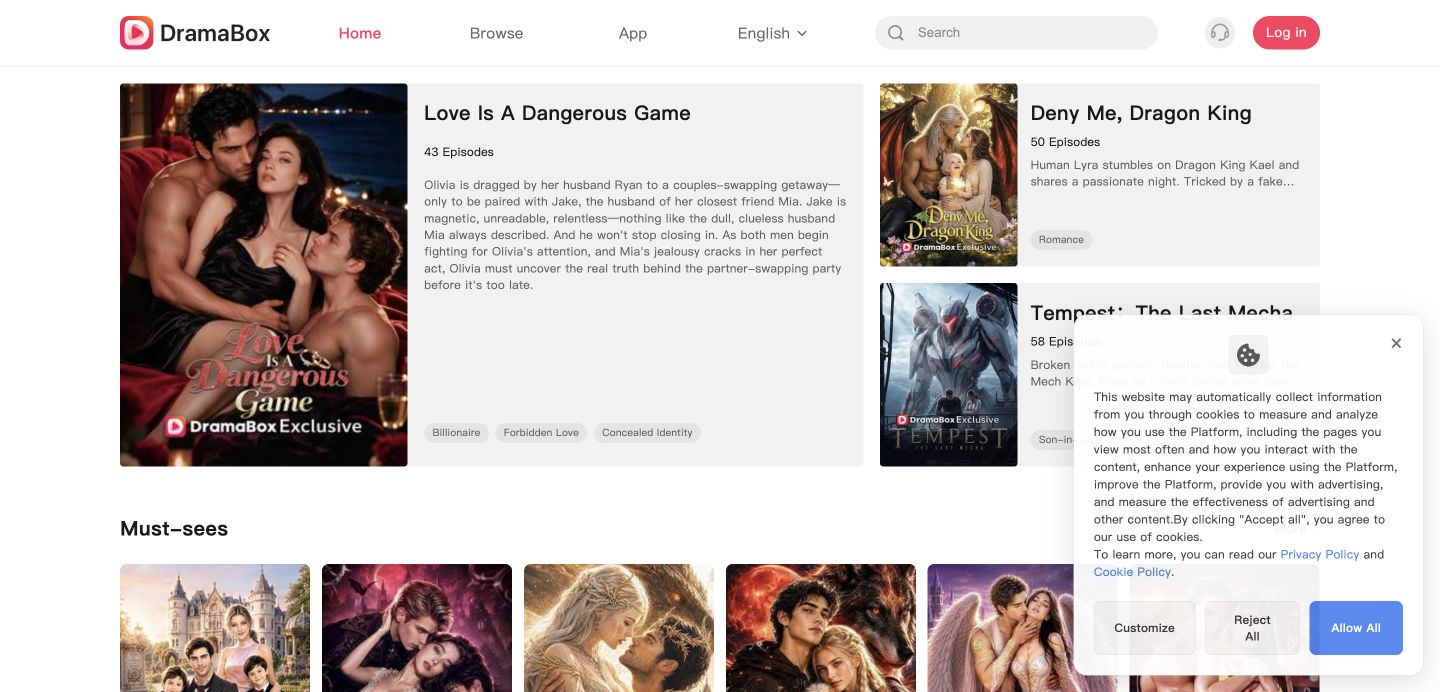
DramaBox offers short serialized dramas. Its developer responses on its App Store listing describe paid subscriptions and options to unlock content through earned coins or ads. Offer values and prices vary, so a fixed coins-per-episode claim would need a defined market and version.
The product is useful to study for the link between a small content unit and a clear reason to continue. For a publisher applying that idea elsewhere, the commercial design must fit the amount of content users receive and the effort required to access it.
Publisher lesson: make access rules visible before a user commits money or time. Explain what a subscription unlocks and how earned rewards work. A reward that is difficult to understand can create support work and distrust even when the content is appealing.
For rewarded viewing, track successful unlocks and viewing continuation after the ad. A completed impression with no usable content benefit is a broken exchange. Compare total retained value with content licensing and production costs.
Do not copy an unverified industry revenue total into an app-level profile. Keep the example grounded in its documented access model and evaluate the relevant economics for the product your own team operates.
18. CapCut
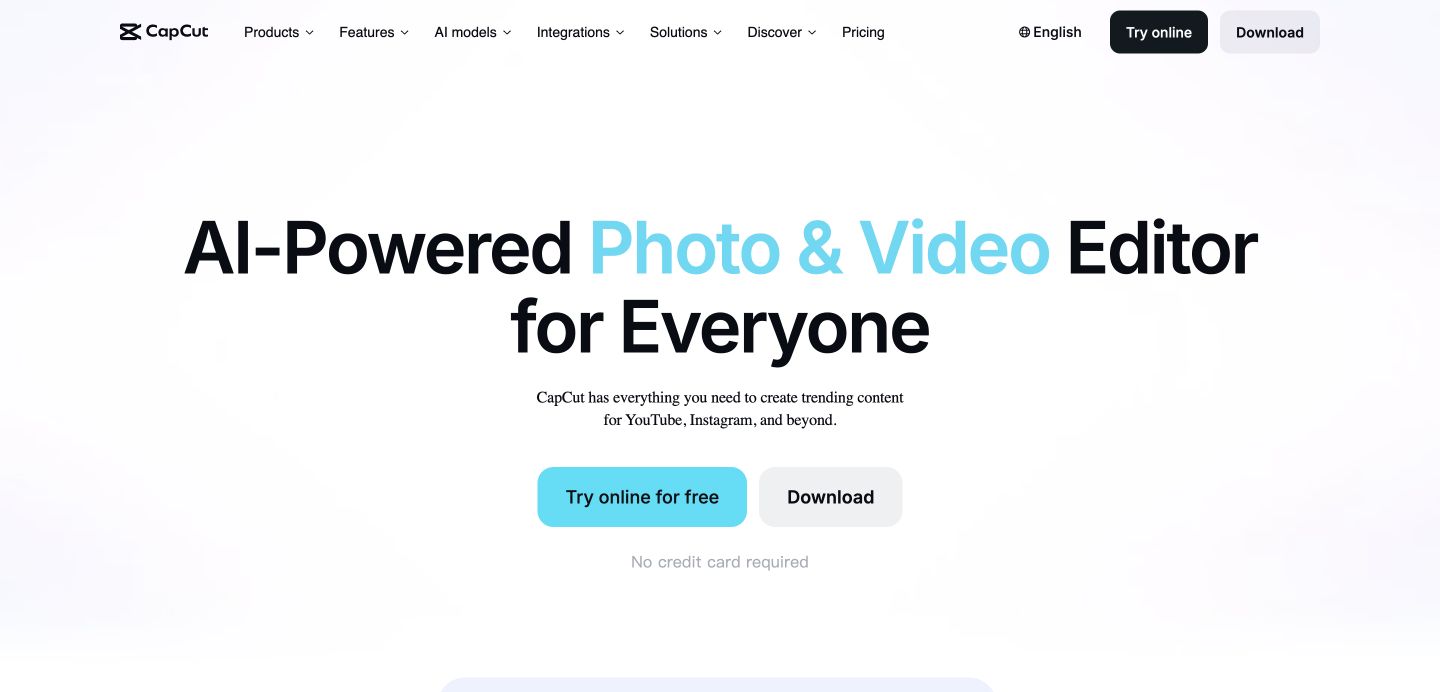
CapCut offers free editing tools alongside paid capabilities and plans. Its current website presents photo, video and AI-assisted production tasks. Plan names, prices, credits and commercial asset permissions need to be checked for the actual platform and account.
The app is useful to study as a tool that helps users produce something they can publish elsewhere. A creator may value a faster workflow, a particular effect, a production feature or access to additional resources. Those are distinct reasons to upgrade.
Publisher lesson: measure completion of the user’s intended output. For an editor, that might be a usable exported video. A paid feature should make its benefit clear in that workflow rather than relying only on a long capability list.
For commercial content, review the rights attached to individual music, templates and assets. Access to an editing application does not automatically establish permission for every asset in every advertising context. Keep the relevant license record with the export.
CapCut’s relationship with a wider distribution platform can have strategic value, but that value should not be counted as app revenue. Without a comparable primary disclosure, leave the total unspecified and study the paid workflow on its own terms.
19. Kwai
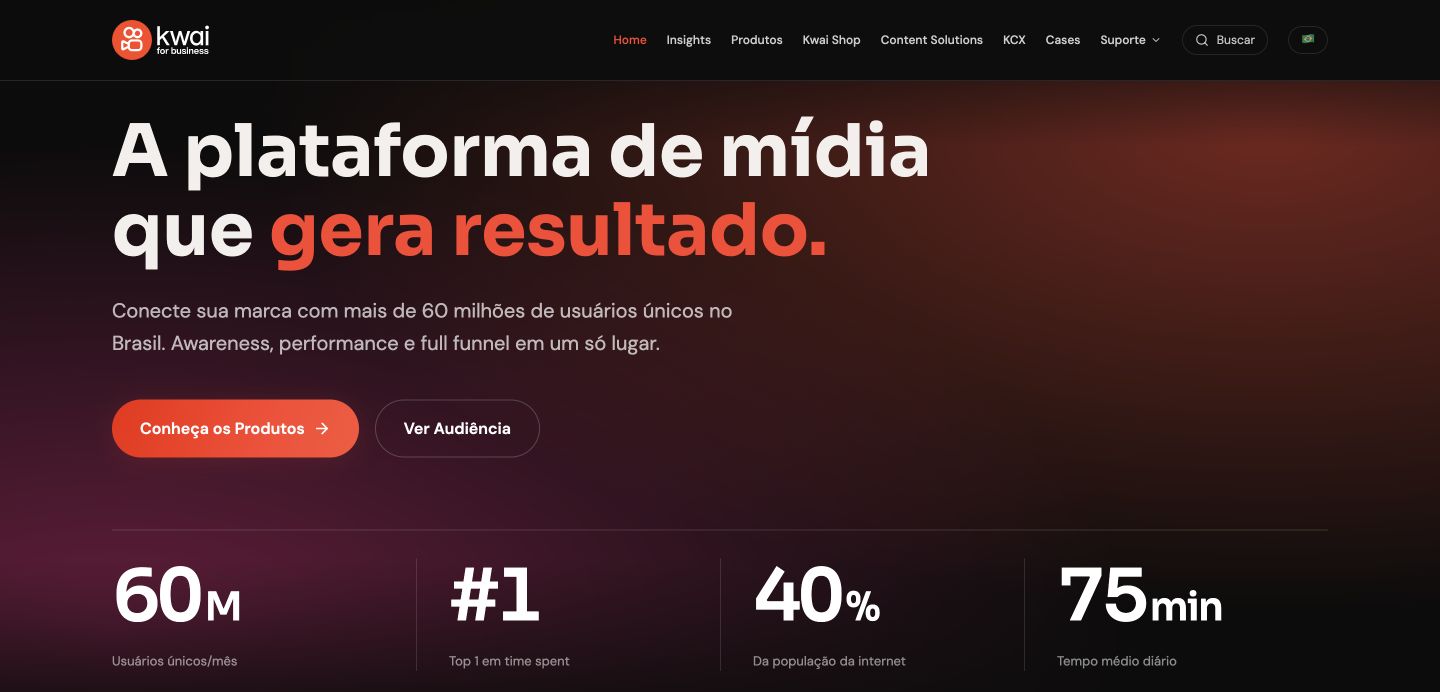
Kwai for Business presents advertising and creator-oriented commercial solutions for Brazil, alongside commerce-related products. The geography belongs in the description. A Brazilian marketing page does not establish the same product availability or audience behavior in every country where related apps operate.
The platform illustrates the relationship between content supply and advertiser demand. Creators and viewers establish the experience in which commercial messages appear. A publisher studying that model should evaluate whether advertising fits the content people chose to consume.
Publisher lesson: build a market-specific operating view. Include local language, creator relationships, advertiser needs, support and payment behavior. Translating an interface alone leaves many of those decisions unresolved.
Keep group revenue, overseas revenue and one app’s revenue separate. They may describe overlapping businesses with different boundaries. A growth percentage without the measured business and period attached cannot support a precise comparison.
Evaluate commerce and creator incentives as separate systems with their own costs and requirements. More content or more engagement can create commercial opportunity, but neither guarantees profitable advertising. The publisher still needs an accurate view of delivered impressions, advertiser outcomes and the cost of maintaining the audience.
Patterns across all four categories
The examples show several different choices, rather than one recipe every app should copy. A publisher can use them to frame a product decision and then test that decision against its own audience.
Define the benefit before choosing the payment mechanism
A booster, an editing capability, a collection benefit and a discovery tool serve different purposes. Start with the user goal and explain exactly what the offer changes. Then choose whether it belongs in a purchase, subscription, rewarded exchange or free experience.
This also makes the offer easier to test. A clearly stated benefit gives the team a hypothesis about who will value it and when. A vague promise of “premium” creates a weaker basis for evaluating conversion and satisfaction.
Ad placement belongs in the product review
Find moments that can accommodate an ad and inspect the transition back into the task. For a game, the relevant state may include a run, inventory or reward balance. For a utility, it may include an unfinished entry or draft. Preserving that state is part of the experience.
Evaluate technical delivery and user behavior together. A higher revenue report cannot explain whether players abandon the session after an intrusive creative. Keep ad complaints, close behavior and recovery failures visible to the product owner.
Purchase-led and hybrid products need different tests
Royal Match’s documented ad-free proposition belongs in a different comparison from a rewarded-ad placement. A purchase-centered product may evaluate paid benefit design, while a hybrid product also needs to understand how earned rewards interact with purchases.
Keep those tests specific. A result from one product does not justify adding ads to every utility or removing them from every game. Use the example to identify a question, then let the product’s own evidence answer it.
Retention windows must match the commercial model
A one-session ad experiment, a seasonal pass and a recurring subscription produce value over different periods. Choose the observation window accordingly. Early conversion can be useful while remaining insufficient to establish longer-term economics.
Record whether revenue is received, estimated or projected. Use the same cohort age when comparing users acquired at different times. This prevents a young cohort from appearing weaker simply because it has had less time to generate value.
Operating costs belong beside revenue
Content production, creator payments, licensing, support, hosting and marketing can each matter. A top-grossing result does not reveal the contribution margin behind it. Keep the cost structure that applies to your proposed model explicit.
For advertising, include the maintenance burden of the stack and time spent investigating incidents. For subscriptions, include ongoing fulfillment. For virtual goods, include economy and delivery work. These costs make the comparison useful for a studio deciding what it can sustain.
Build your own app monetization scorecard
Begin with a defined audience and period. Record active users, retained users, payer conversion, purchase revenue, ad revenue and any relevant subscription measures. Keep each denominator visible so two teams can reproduce the same result.
Separate the new user journey from established behavior. A first-session upgrade offer and a returning user’s renewal are different decisions. Their reports should answer different product questions, even when both contribute to the same revenue total.
For ads, connect eligible requests, delivered impressions and finalized revenue. Add successful reward delivery for rewarded formats. A source’s eCPM can look strong while weak availability or an integration failure limits the app’s total earnings.
For purchases, connect the offer shown, completed transaction and delivered benefit. Track refunds and support cases on the same basis as the finance report. A shop redesign that improves clicks may still leave the actual purchase journey unchanged.
For subscriptions, inspect trial conversion, renewal, cancellation and use of the paid benefit. Choose a metric that reflects the product’s purpose. Subscription revenue alone does not show whether users received the value the offer promised.
Then write the next experiment in plain language. Identify the change, expected behavior, audience, observation window and rollback condition. Keep the existing configuration available so the team can recover quickly if the change creates reward or stability problems.
Use the examples without copying their assumptions
Start with a short interview inside the team. Ask product where users lose momentum, engineering where delivery is fragile, support which complaints repeat and finance where the reports disagree. The overlap often identifies a more useful commercial problem than a broad request to “monetize like a top app.”
Choose one problem for the first experiment. If rewarded availability is weak, investigate delivery before changing the reward value. If the upgrade is unclear, improve the explanation before adding more tiers. If the paid feature is rarely used, study the user need before increasing promotion.
Keep a record of what the experiment teaches. Save the configuration, audience rules, creative or offer, results and limitations. A reusable decision record is more valuable than a collection of screenshots with no explanation of what happened.
Share the result in the language of the decision. State whether the team will keep, revise or remove the change, and what evidence supports that action. Avoid claiming that a short test proves a universal truth about a network, format or business model.
Keep a reusable evidence record
When adding a revenue figure to a future update, save the original disclosure beside the working comparison. Record the company or app measured, the exact period and whether the amount is reported or estimated. A short quotation is useful for the definition, but the full source link is necessary for later verification.
For a store intelligence estimate, identify the stores and countries covered. Check whether the provider includes taxes, store fees, advertising or direct purchases. A large app can have meaningful activity outside the visible dataset, and an estimate should retain that limitation when it is repurposed into a social post or presentation.
For a financial disclosure, look for the named reporting unit. A company may report a segment containing several games, or a platform business spanning devices. If the document does not separate the app, write that the app-level amount is unavailable. Keep valuation and funding information in separate fields because they measure different things.
For a product claim, use the current official help or product page and specify important eligibility conditions. A feature available in a test should not become an unconditional recommendation. A historical pricing screenshot should not be treated as a current offer for every market.
Give each saved item a descriptive, year-free asset name and attach the source, measurement period and approved wording. The date belongs in the evidence record when it matters. This lets the team reuse a diagram or screenshot while updating the surrounding claim without producing another duplicate image.
Before reusing a figure outside the article, check that the shortened version still states the relevant scope. A headline that drops “estimated store spending” or “company-wide” can reverse the meaning of an otherwise accurate comparison. Keep the qualification that makes the number useful.
Where UndrAds fits
If the bottleneck sits in operating advertising across partners, begin with the actual stack and workload. Review bidding and waterfall setups, compare MAX, LevelPlay and AdMob, and use the mobile game ad revenue guide to connect impressions with earnings.
For a practical review, contact UndrAds with your app, audience, current demand partners and the operating problem you want to solve. The aim is a measurable improvement in your own product’s economics.