
Contextual advertising matches ads with the content someone is viewing. For publishers choosing partners, the useful comparison is between the inventory each product can monetize, the signals it uses and the work required to integrate it.
Chrome has not universally removed third-party cookies. Google said in its April 2025 update that it would maintain its existing approach to user choice and would not introduce a new standalone cookie prompt. Contextual monetization remains useful across mixed browser and consent conditions.
Contextual monetization options at a glance
| Provider | Product role | Publisher use to evaluate | Main qualification |
|---|---|---|---|
| Google AdSense | Ad network with several targeting methods | Monetizing content websites | Contextual targeting is one part of its ad selection |
| Media.net | Sell-side platform and publisher monetization | Evaluating demand for content-rich properties | Confirm the product, signals and integration offered |
| GumGum | Publisher demand and contextual technology | Adding supported display demand and contextual capabilities | Demand access and content-analysis tools are distinct |
| Taboola | Publisher advertising and audience products | Native, display and recommendation-related monetization | Evaluate the specific placement and targeting setup |
| Teads | Media-owner monetization platform | Contextual demand and broader inventory monetization | Confirm formats, access and contract scope |
| UndrAds | Contextual targeting and autonomous AdOps service | Managing content matching and monetization operations | Agree on supported actions, data use and measurement |
These providers do not offer identical products. The order is a practical shortlist, without a measured revenue ranking. Commercial terms, accepted inventory and integration requirements need confirmation for your property.
Ad networks and publisher platforms
Google AdSense
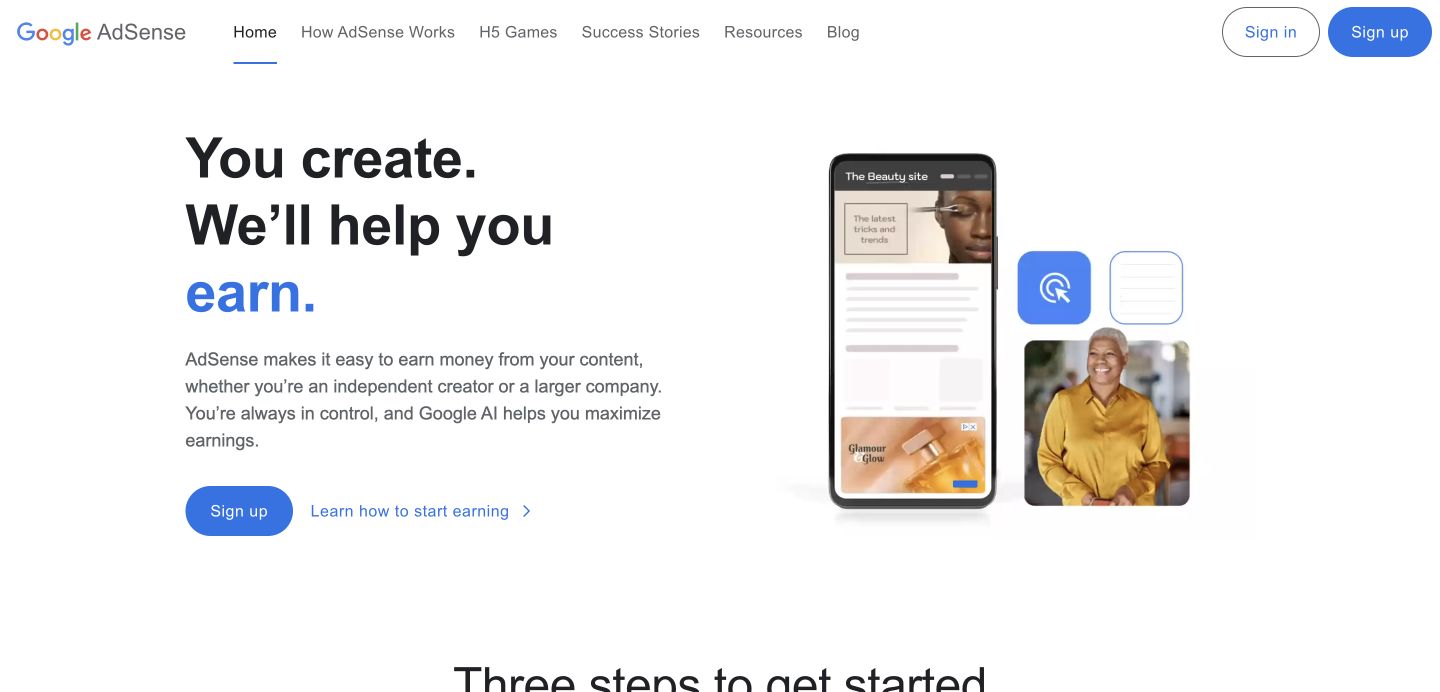
Google’s AdSense targeting documentation describes contextual, placement, personalized and run-of-network targeting. Contextual selection uses page content, while other available methods use different signals.
AdSense is a candidate when you want to evaluate advertising on a content website. Review account and site eligibility, placement controls and the ad experience before launch. Avoid describing every AdSense impression as purely contextual.
Its non-personalized ads guidance explains the contextual information used for that serving mode. Review data use and the applicable consent setup separately from the targeting label.
Media.net

Media.net describes itself as an SSP combining SearchSignals with audience data. Its publisher offering covers demand access and monetization for content-rich environments, including cookieless opportunities.
Consider it when you want to evaluate a specific publisher product and its available demand. Ask which contextual and audience signals are used, which formats are included and how the integration fits your ad server or auction.
Confirm inventory requirements and commercial terms for your account. A content-rich site can still have weak demand for a particular country or placement; test the actual inventory instead of relying on a broad category label.
GumGum

GumGum’s publisher page lists server-to-server, header bidding, ad-server and direct-tag integration routes. Its contextual methodology describes content-level analysis and its limitations.
Evaluate publisher demand access separately from the content-analysis capability. Clarify whether the proposal includes demand, classification, brand-suitability controls or a combination.
Check the pages your site actually publishes. Content that loads dynamically, mixed layouts and user-generated sections can complicate classification. Compare the coverage and accuracy of the proposed setup using representative URLs before assuming the whole site is understood equally well.
Taboola
Taboola’s publisher products cover advertising monetization and audience tools, including native and programmatic display demand. Its offering is broader than a single contextual ad unit.
Evaluate the proposed placements, recommendation controls and targeting methods. Keep paid recommendations clearly distinguishable from editorial content, and assess the effect on page experience and onward reading.
Commercial fit depends on the product and contract. Ask about inventory commitments, exclusivity where applicable, implementation responsibilities and the reporting available for the placements you plan to use. Compare net revenue alongside page engagement.
Teads
Teads’ media-owner offering describes contextual intelligence and monetization across screens. Confirm which formats, inventory and integration are included in the proposal for your property.
The relevant company history is that Outbrain completed its acquisition of Teads on 3 February 2025, with the combined business operating under the Teads name. The official announcement documents that transaction. Taboola remains a separate product comparison in this guide.
When reviewing an existing contract or older integration document, check the current legal entity, product name and support contact. Branding changes can otherwise make it difficult to match an agreement with the service being offered.
UndrAds contextual targeting
UndrAds
UndrAds’ contextual targeting service describes analysing content and matching it with advertising demand. It is presented here as a targeting and AdOps service.
Before a pilot, confirm the integration, supported inventory, demand relationships and operational actions in scope. Ask which content is analysed, what information leaves the property and which controls your team retains.
Set a baseline by page category, country and device. Evaluate the effect on revenue per session, ad quality and user experience. The provider’s description of a capability should be tested against your own content and traffic.
Contextual targeting and data use
Matching an ad with a page topic does not, by itself, explain every part of the advertising system. Measurement, frequency control, fraud prevention and other processes may use additional data.
Review the proposed implementation’s data flows, storage, partner list and consent configuration for your property. Google’s non-personalized ads documentation is one example of why the serving mode and the wider data setup need separate attention. Avoid treating the word “contextual” as a complete description of either.
For the underlying concept, see how contextual advertising works. For implementation decisions, compare the proposed setup with your current header bidding and ad-server arrangements.
How to test a contextual partner
Begin with a defined inventory segment. A publisher with news, finance and entertainment pages should not assume that one category’s result represents every page.
Record a baseline for revenue per session, page RPM, ad availability, viewability, page speed and reader engagement. Break the results out by device, country, content category and the serving conditions relevant to your implementation.
Use a concurrent comparison where feasible. Keep ad density and placement stable while testing the demand or targeting change. If both change together, the result becomes harder to interpret.
Review sampled ads as well as revenue. Check whether the content classification makes sense, whether brand-suitability settings exclude appropriate material and whether the placements fit the reading experience. Record the operating effort needed to maintain those controls.
Contextual ad network FAQ
Which contextual ad network is best for a small publisher?
Start with account eligibility, technical requirements and the inventory you can offer. AdSense is one candidate for a content website, while other providers may require a commercial review. A provider’s acceptance and live demand should be confirmed before integration work begins.
Are contextual ads always cookie-free?
Contextual selection can use the content of the current page. The complete implementation can also include other advertising and measurement processes. Ask about the actual signals, identifiers and storage used by the proposed product.
Do contextual ads guarantee a higher RPM?
No. Results depend on demand, content, geography, placements, eligibility and implementation. Compare settled revenue across equivalent traffic while checking the effect on page experience.
Are Taboola and Teads the same company?
They are separate offerings. The February 2025 transaction covered Outbrain’s acquisition of Teads. Use the current provider’s product documentation and legal entity when reviewing a contract or integration.
Choose a partner after identifying the gap it should fill. If the main problem is content matching or operational control, ask UndrAds to review the setup with a defined pilot and comparison group.